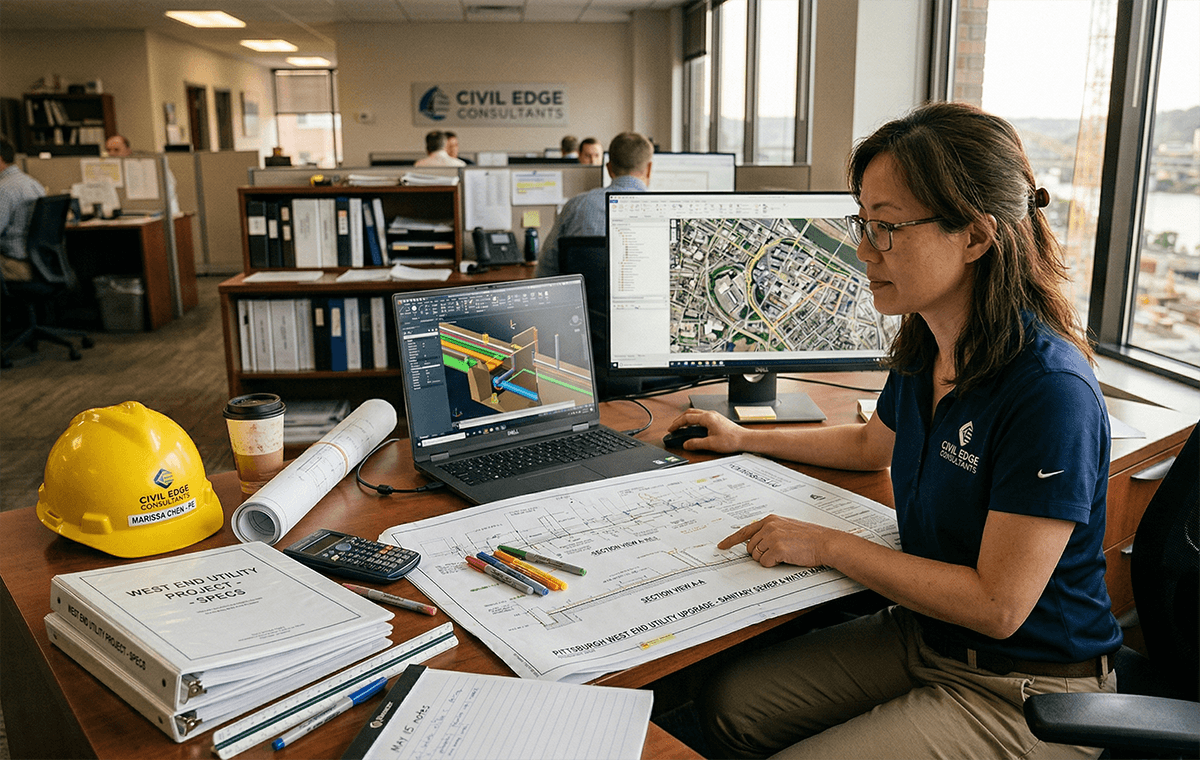
Architects, engineers, and firm principals use this free tool to pull authority content straight from their project work — no writer, no agency, no login needed.
Technical, high-authority perspective that positions you as the strategic voice in your discipline — not just another firm in the shortlist.
A structured portfolio piece that turns a completed engagement into a trust-building asset for proposals, RFQs, and your website.
A sharp summary for developers, owners, or referral sources who need to understand your value before the meeting starts.
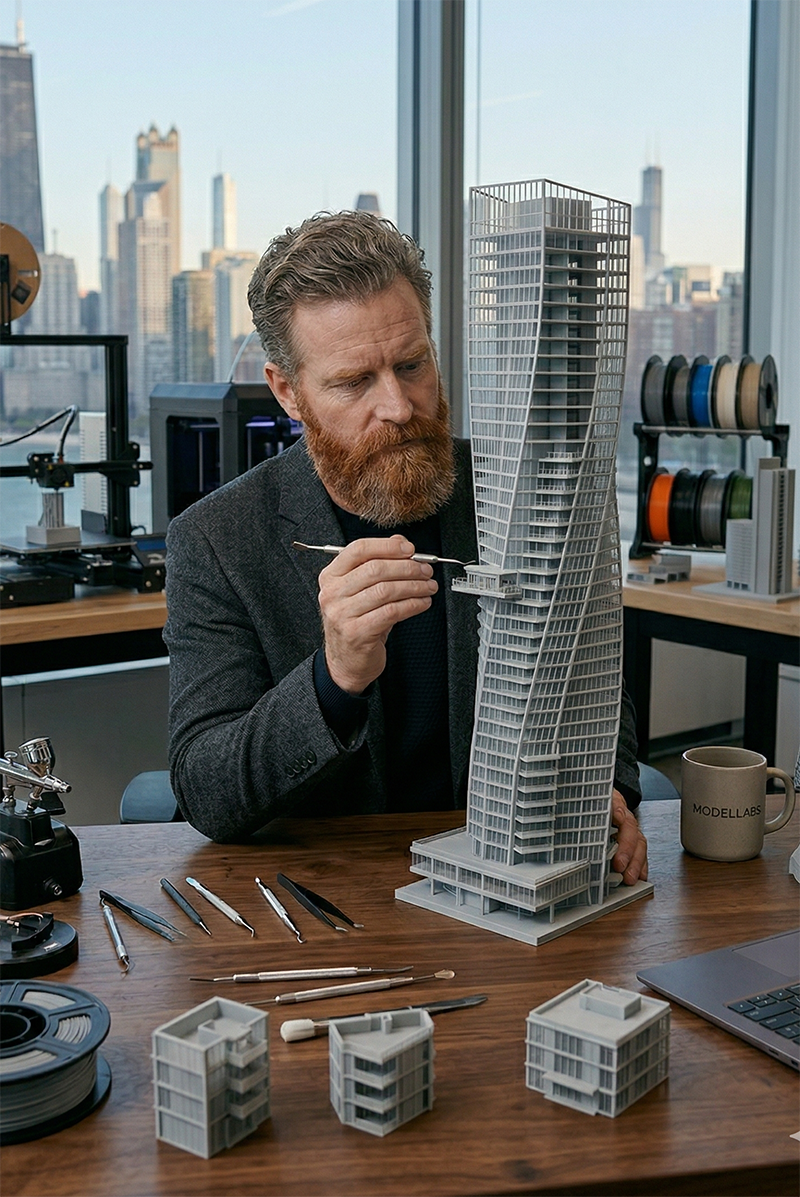
Developers, owners, and selection committees do their homework before a shortlist is ever made. If your expertise isn't visible online, you're being evaluated on aesthetics alone — and someone with a better content strategy is already winning.
Answer five questions about the engagement you just wrapped. The AI does the rest — structured, on-brand, ready to publish.
Tell us what the project was, what constraints you navigated, and what the outcome delivered. Type it out or record a quick voice note.
Project type, client sector, challenge, methodology, measurable outcome
The Ghostwriter agent maps your input to a Problem-Solution-Impact framework and strips out the filler. No fluff makes it through.
Transcribe → Categorize → Structure → Generate
A LinkedIn post, a portfolio case study, and a client brief — all written in your voice, calibrated for your discipline, ready to publish.
LinkedIn Post / Case Study / Client Brief
Every asset is written for architecture, engineering, and professional services. Not for tech startups. Not for B2B SaaS. For principals and leadership who need their expertise to read as well as it performs.
The developer called us three weeks into demo. The original load-bearing assumptions were wrong — a 1960s-era modification had been quietly redistributing stress to a wall that was about to become an open-plan lobby.
Most firms would have flagged it, issued an RFI, and waited. We modeled three remediation scenarios over 48 hours, recommended a hybrid steel moment frame, and had revised construction documents back to the GC before the scheduled framing crew showed up.
Project stayed on schedule. Change order came in 60% under what a full structural redesign would have cost. The developer didn't miss a single investor update milestone.
This is the kind of problem-solving that never makes it into a portfolio. But it's exactly why clients call us before they call anyone else.
If you're a developer working on adaptive reuse or mixed-use in Northern Nevada — this is the conversation worth having early.
THE CHALLENGE
Mid-demolition discovery revealed undocumented load path modifications in a 1960s-era structure. The affected wall was scheduled to become a primary open-plan lobby, requiring immediate structural re-evaluation without halting the construction timeline.
THE APPROACH
The team modeled three remediation scenarios within 48 hours, analyzing load redistribution, construction cost impact, and schedule risk for each. A hybrid steel moment frame solution was selected and fully documented for the GC before the scheduled framing crew mobilized.
THE OUTCOME
Project remained on schedule. Remediation change order came in 60% below the cost of a full structural redesign. Client met all investor reporting milestones without delay.
To: [Developer / Owner / Referral Source]
I wanted to send over a brief summary of the structural challenge we resolved on the Reno adaptive reuse project last month — in case it's relevant context for projects you're evaluating.
We were brought in mid-demo after undocumented load path modifications were discovered in the original structure. Within 48 hours we had three remediation options modeled, a recommendation approved, and revised documents back to the GC — with zero schedule impact.
The developer avoided a costly redesign delay and came in 60% under the contingency budget for that scope item.
If you have adaptive reuse or mixed-use work on your horizon where early structural engagement could prevent a similar situation, I'd welcome a brief conversation.
— [Your Name], [Firm Name]
Every engagement you close without documenting it is a shortlist you'll never make. Start with one project. See what the tool builds. It takes less time than a project debrief email.
Built by Michael J McAteer, a Fractional CMO who spent years watching talented firms lose RFQs to less capable ones — because the less capable ones had better content systems. This tool is the fix.